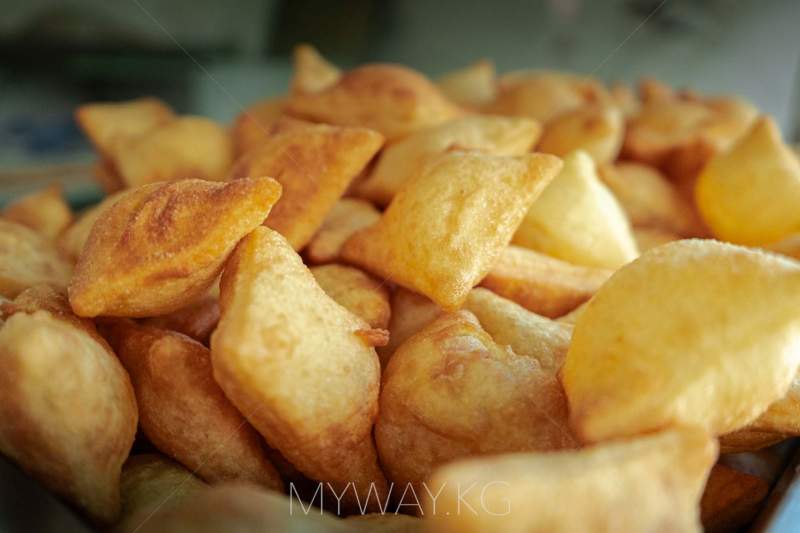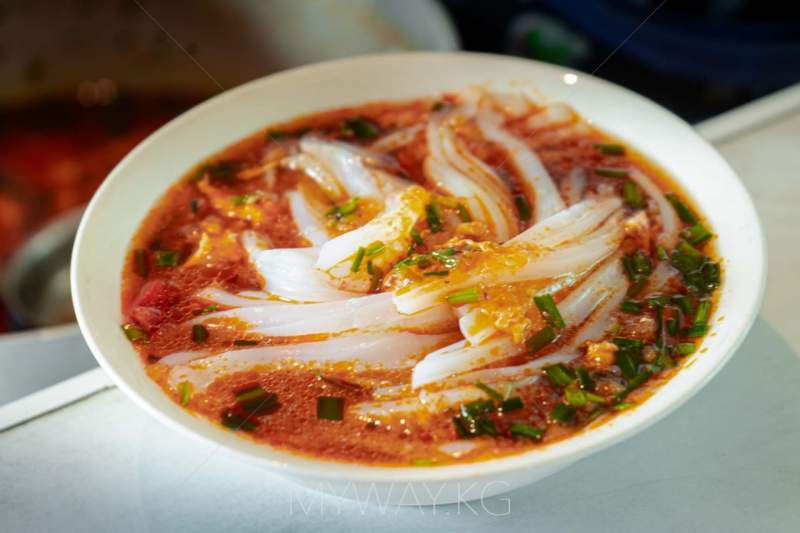
If you ask locals in Kyrgyzstan which dish best defines Karakol, most will answer without hesitation: Ashlan-fu. It is the city's signature gastronomic brand, drawing thousands of food travelers every year. Many specifically plan a stop at the Karakol bazaar during their trip around Lake Issyk-Kul just to taste the authentic version of this iconic cold soup.
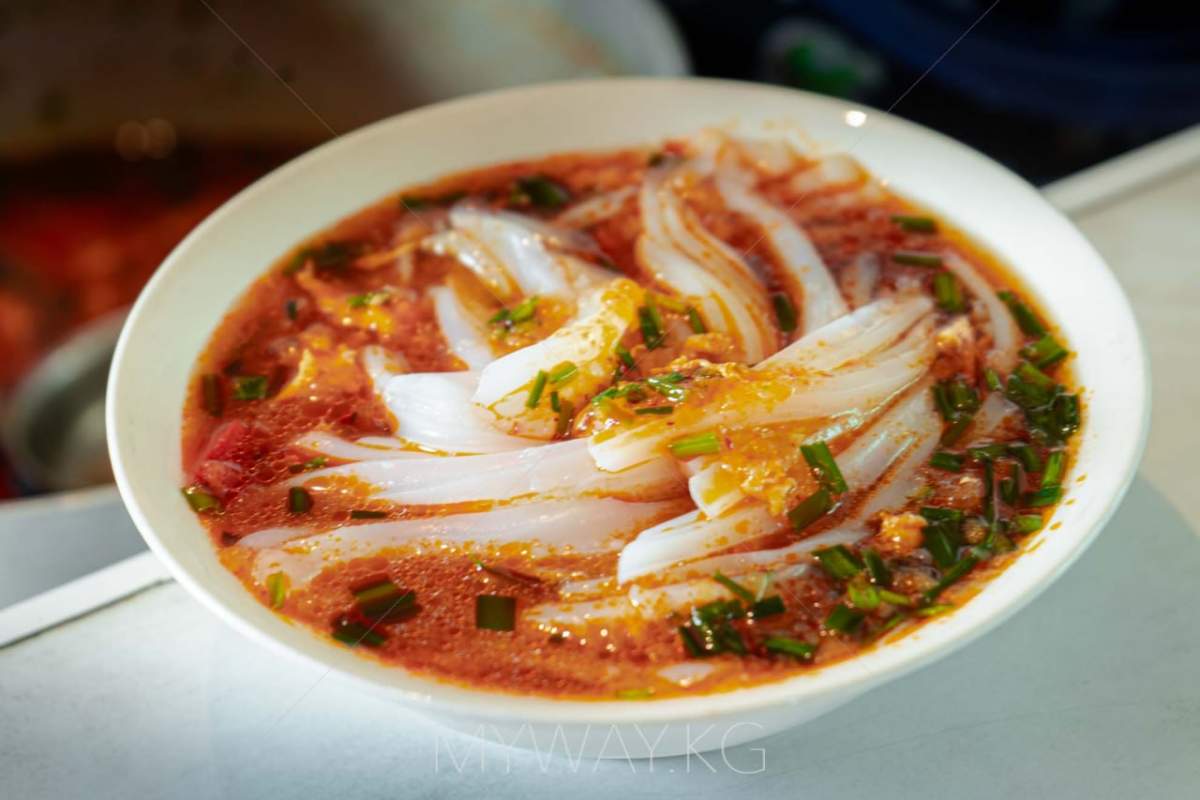
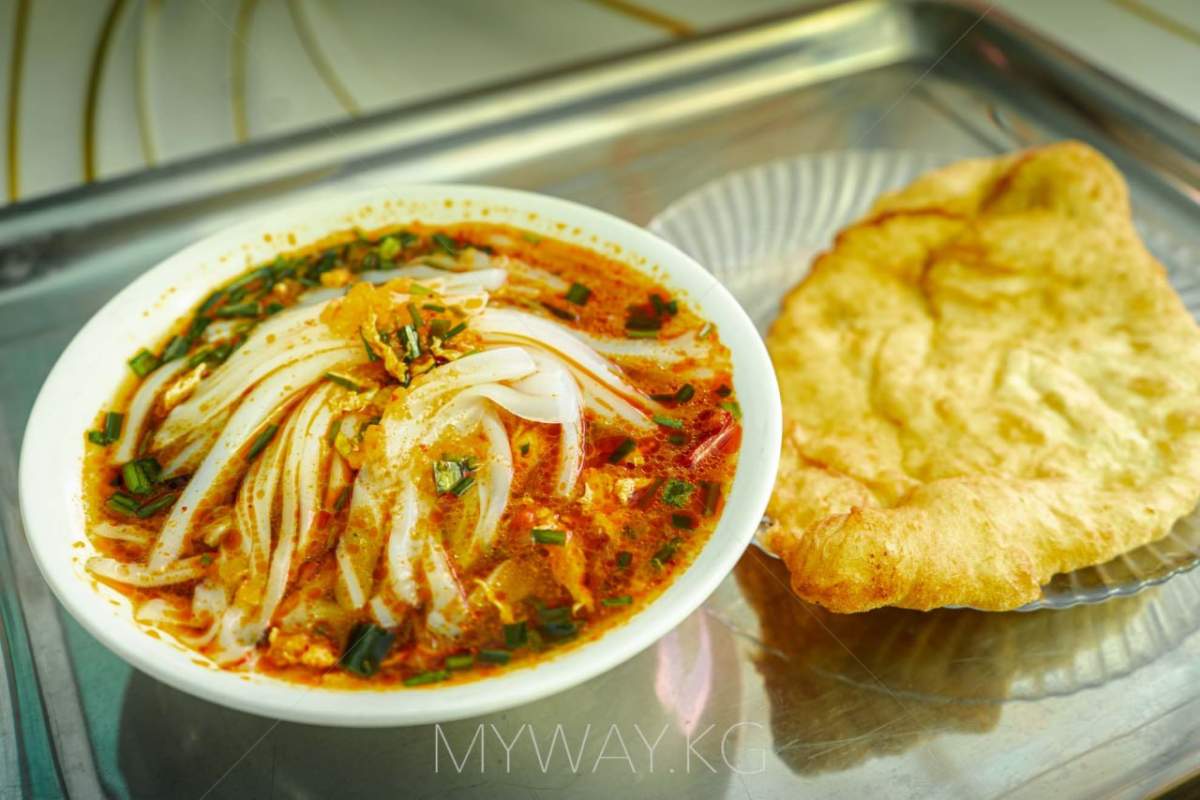
Served ice-cold, Ashlan-fu combines chewy wheat noodles, delicate starch jelly, and a bright, spicy-sour broth. On a hot summer day, it is remarkably refreshing, while the punchy interplay of vinegar, garlic, and chili awakens the palate from the first spoonful. Traditionally, a bowl of Ashlan-fu is paired with a hot, deep-fried potato patty (pirozshok)—a hearty,comforting contrast to the cold and fiery soup.
Ashlan-fu traces its roots to the Dungan people—Chinese Muslims who migrated to the Semirechye region in the late 19th century following uprisings in China. Along with their farming techniques and craftsmanship, they brought a rich culinary tradition.
One of their staple dishes was a cold soup known as liangfen ("cold starch"). Over time, the recipe adapted to local ingredients and tastes, adopting the Kyrgyz prefix ash (meaning "food" or "meal"). Unlike its Chinese predecessor, the Central Asian version incorporates classic wheat noodles alongside the starch jelly ribbons, often accompanied by eggs,meat, and fresh herbs. The broth is brewed using vinegar, water, caramelized sugar, and laza—a fiery condiment made of crushed garlic and ground red chili fried in oil.
The dish gained widespread popularity during the Soviet era. In the 1970s, Dungan women began selling it on the streets of what was then Przhevalsk (now Karakol). The trade eventually shifted to the central market, establishing Ashlan-fu as the city's undisputed king of street food.
The true secret of exceptional Ashlan-fu lies less in exotic ingredients and more in technical precision. Every core component is prepped separately and requires seasoned experience:
Despite modest pantry staples, preparation takes nearly an entire day. Perfecting the starch jelly is considered the hardest craft: it must be firm enough to hold its shape, springy to the bite, and melt-in-your-mouth tender.
Nearly every family stall in Karakol guards its own recipe passed down through generations, which is why no two vendors serve the exact same flavor profile.
Tasting Karakol’s Ashlan-fu is more than just sampling local street food; it is an introduction to regional migration history, Dungan cultural heritage, and the living pulse of everyday Karakol. The dish has long been embedded into the city’s identity and stands as one of Kyrgyzstan’s most recognizable culinary treasures. For many travelers, the Karakol journey begins right over a cold, fiery bowl whose distinctive taste cannot be mistaken for anything else in Central Asia.
To experience why Ashlan-fu became a culinary phenomenon, head directly to the dedicated Ashlan-fu alley at the central bazaar. Here, you enjoy it just as locals do: sitting at unpretentious communal tables amid market chatter, selecting from dozens of side-by-side stalls. Many sellers boast loyal patrons who have returned to the exact same bench for lunch across decades.
Behind every stall is an ongoing legacy. Some vendors have been handcrafting the dish for 25 to 30 years, preserving heirloom techniques learned from their mothers. At the same time, recipes vary: some emphasize a sharper vinegar kick,others favor deep roasted garlic notes, and some take pride in extra-potent chili oil. Hopping between stalls to compare profiles and find your personal favorite is part of the culinary adventure.
At first glance, eating in a bustling market alleyway right next to everyday trading stalls might seem daunting. However,established vendors have a distinct advantage: a constant, high-volume turnover driven by regular local clientele who know them by name.
The market setting also offers complete transparency: you can watch your bowl assembled right in front of you—a dynamic ritual you miss in sit-down restaurants. When choosing a stall, prioritize cleanliness:
Order a standard bowl alongside a hot fried potato pirozhok. If time allows, sample portions from two or three different vendors. You will quickly overhear lively debates among patrons about which version strikes the perfect acidity or captures how it "used to taste." In Karakol, those debates are part of the flavor.
Discover more handpicked adventures and guided experiences in Kyrgyzstan