Kyrgyz folk art grew directly out of everyday nomadic life, where nearly every object had to be useful, durable, and practical. From sheep's wool came felt and floor rugs; from wood came yurt frames, furniture, tableware, and musical instruments; from leather came footwear, clothing, vessels for kymyz, and equestrian tack. Yet practicality was never the whole story: artisans strove to infuse beauty into everything surrounding daily life, from the interior of a dwelling to festive attire.
Craftsmanship formed a vital part of family culture and was handed down from generation to generation. Men typically worked with wood, metal, and leather, while women specialized in felt-making, weaving, braiding, and embroidery—though these boundaries were never absolute and varied according to local traditions and household needs. A defining trait of Kyrgyz decorative and applied arts is the rich diversity of regional schools. In the north, patterned felt carpets,leatherwork, and ornamental chiy reed mats flourished; in the south, pile carpet weaving, intricate embroidery, and patterned loom weaving reached particular heights. These regional differences evolved over centuries through local history and cultural exchange with neighboring peoples.
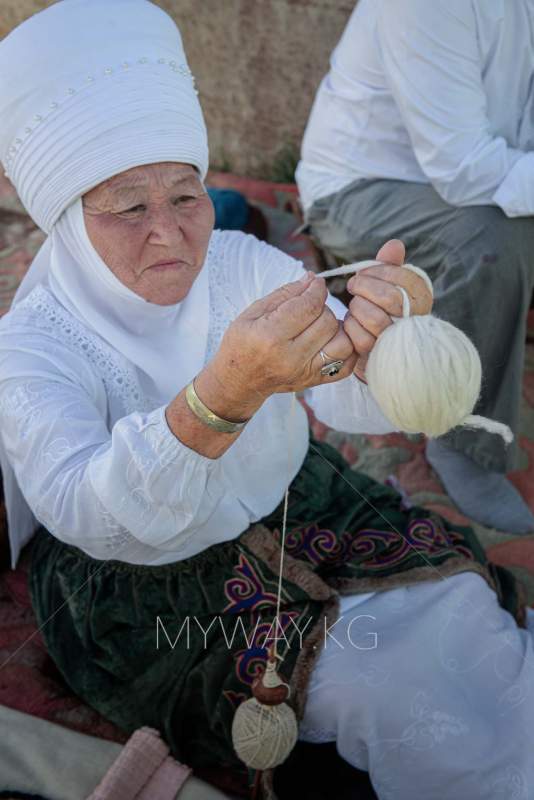
Felt is one of the most iconic materials of Kyrgyz culture. Crafted from sheep's wool, it provided yurt coverings, carpets,floor mats, storage bags, clothing, and traditional headwear. Thick felt sheets shielded families from cold, wind, and moisture, while bold ornaments transformed the interior of a mobile home into a vibrant artistic space. Wool was also twisted into sturdy ropes, mats, and gear essential for riding and pack animals.
The two signature styles of traditional felt carpets are shyrdak and ala kiyiz. Both insulated yurt floors, brought warmth to the home, and traveled alongside families during seasonal migrations:
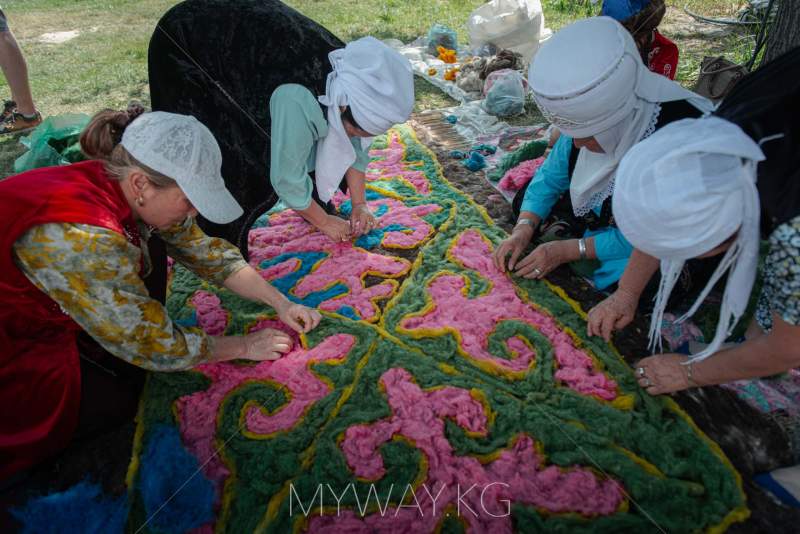
Felt-making demanded collective effort: layers of wool were spread out, soaked, rolled into tight bundles, and rolled back and forth for hours until the fibers locked into dense fabric. For major projects, women gathered together in a tradition of mutual aid known as kiyiz ashar.
Ornaments here go far beyond simple decoration. Ram's horns, curls, diamonds, and geometric motifs connect to the animal world, nature, and ancestral wishes for prosperity.
One of the premier centers of felt craftsmanship today is the village of Kochkor in the Naryn Region, where local artisans and women's cooperatives continue crafting traditional carpets and introduce travelers to hands-on felting workshops.Felt-making also thrives across Issyk-Kul and other regions where wool-processing skills remain part of daily life.
In 2012, the traditional art of making Kyrgyz felt carpets (ala kiyiz and shyrdak) was officially inscribed on the UNESCO List of Intangible Cultural Heritage in Need of Urgent Safeguarding.
Embroidery occupied a prominent place in Kyrgyz applied arts, adorning men's and women's garments, suede trousers,women's wrap skirts (önyür and beldemchi), and traditional headwear such as kalpaks, elecheks, and chach kep.Household textiles were decorated with equal richness: ornamental yurt friezes (jabyk bash and ashkana bashy), storage bags (bashtyk and ayak kap), hanging wall shelves (tekche), headscarves (duriya), pillowcases (jazdyk), and bedcovers.
A place of special honor belonged to the embroidered wall hanging tush kiyiz. Its composition was built around a wide ornamental border of black velvet framing a central panel of vibrant patterned silk, velvet, plush, or brocade. Dense embroidered bands and narrow accent borders completed the design, making the tush kiyiz the visual centerpiece of the yurt interior. Hung in the honored tör section where guests were welcomed, a tush kiyiz beautified the home, showcased the maker's needlework mastery, and often formed a cherished part of a bride's dowry.
Artisans embroidered with cotton, wool, and silk threads on velvet, cotton, wool cloth, broadcloth, felt, and leather.Primary stitches included chain stitch (tambur), satin stitch, blanket edge stitch, and braided plait stitch, with cross-stitch spreading in the late 19th century.
Designs stood out for large-scale motifs and clean, flowing outlines, with makers carefully balancing embroidered areas against open background space. Classic motifs included ram's horns (kochkor müyüz), bird wings (kush kanat), triangular amulets (tumarcha), zigzags (iyrek), spine diamonds (omurtka), and silhouettes of the köökör leather flask—alongside botanical pomegranates (anar), almonds (badam), blossoms, and stylized horses, rams, deer, ibex, and camels.
A distinct branch of textile art is kurak—traditional patchwork sewing. Artisans assemble colorful fabric scraps into crisp geometric compositions, stitching them into bedspreads, quilts, cushions, bags, and everyday household items. Kurakallowed families to use every scrap of cloth without waste, turning practical thrift into striking decorative art.
Found across Kyrgyzstan and especially prominent in southern craft traditions, kurak is also tied to family customs—such as ceremonial children's garments sewn from numerous multicolored patches or threads to symbolize protection and community blessing. Every kurak piece reflects the nomadic ethic of resourcefulness: preserving materials, giving remnants new life, and creating objects built to serve a family for years.
Between the 15th and 19th centuries, flat-woven patterned textiles were widespread across Kyrgyzstan. Working on simple horizontal ground looms (örmök), weavers produced not only floor rugs and decorative bands for yurts, but men's outer coats, grain sacks (kap), and double saddlebags (kurjun).
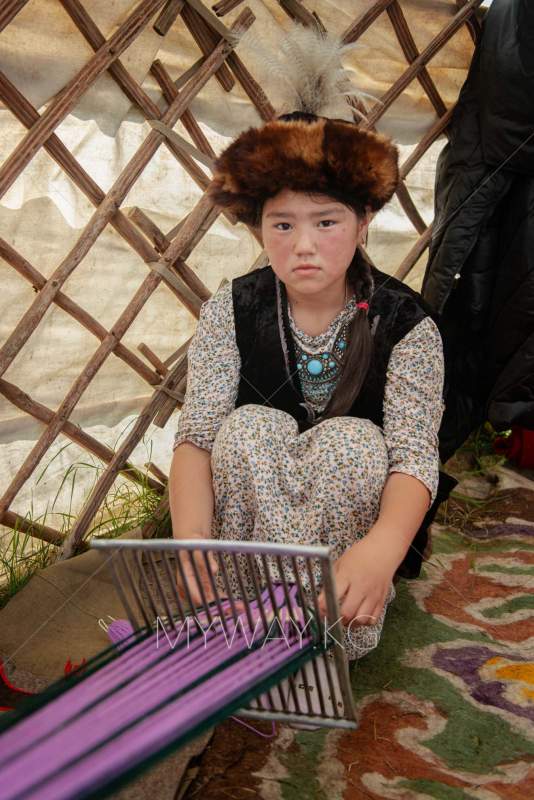
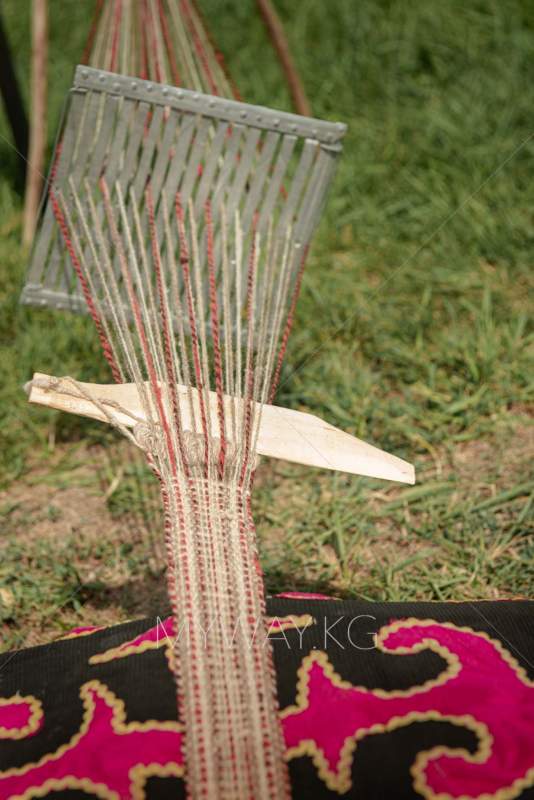
Researchers identify three principal techniques of traditional Kyrgyz patterned weaving:
Woven ornaments mirrored the surrounding world: ram's horns (kochkor müyüz), tiger claws (jolbors tyrmak), partridge eyebrows (kekilik kash), dog's paw (it taman), almond (badam), zigzag (iyrek), and architectural motifs like kerege köz—the diamond openings of a yurt's lattice wall. Because woven bands both decorated the yurt and bound its wooden frame together, beauty and structural purpose were inseparable.
Hand-braiding was equally vital. Artisans braided woolen waist cords (ychkyr) for traditional trousers and ornamental tapes (chalma) used to trim felt rugs, secure yurt components, fasten garments, and decorate cradles. Thick, durable wool ropes and lassos (arkan) were twisted for herding, pack transport, and migrations, with several archaic braiding techniques best preserved in the Alay Valley and southwestern Osh Region.
Mats woven from the tall, sturdy stalks of steppe chiy grass were indispensable to the traditional dwelling. Patterned chiyscreens were crafted across all Kyrgyz tribal groups—including communities in the Eastern Pamirs and Jirgatal—serving simultaneously to insulate the yurt, shield its interior from drafts, and enrich its visual appeal.
Production began by wrapping individual reed stalks in colored wool yarn to build segments of a larger pattern. The wrapped stalks were then bound together on a simple upright frame using weighted wool threads tossed back and forth across a crossbar. Unwrapped sections were deliberately left at both ends of the mat to protect the patterned center from dust and wear during seasonal moves.
Patterned chiy served several specialized purposes: long chygyman kanat chiy panels wrapped around the wooden lattice walls beneath the outer felt; ashkana screens partitioned off the kitchen area; eshik chiy lined the inside of the entrance flap; and the same technique produced sturdy protective cases (chyny kap) for carrying porcelain tea bowls. Geometric and horn motifs dominated—kochkor müyüz, teke müyüz (ibex horns), karga tyrmak (crow's claws), omurtka diamonds,kerege köz, and tumarcha triangles—frequently paired in bold red and blue palettes.
Kyrgyz silversmiths (zergerler) worked primarily in silver to craft earrings, rings, bracelets, pectoral ornaments, hair pendants, clasps, and belt fittings. Silver was valued far beyond adornment: jewelry served as family wealth, passed down across generations and marking pivotal life milestones—matchmaking, weddings, and the birth of children.
Women's jewelry was especially expressive, with monumental chest pieces, intricate earrings, and long braid ornaments completing festive attire while signaling age and marital status. Smiths employed casting, chasing, engraving, filigree,stamping, and stone inlay, incorporating floral, geometric, and nature-inspired motifs that varied subtly from region to region.
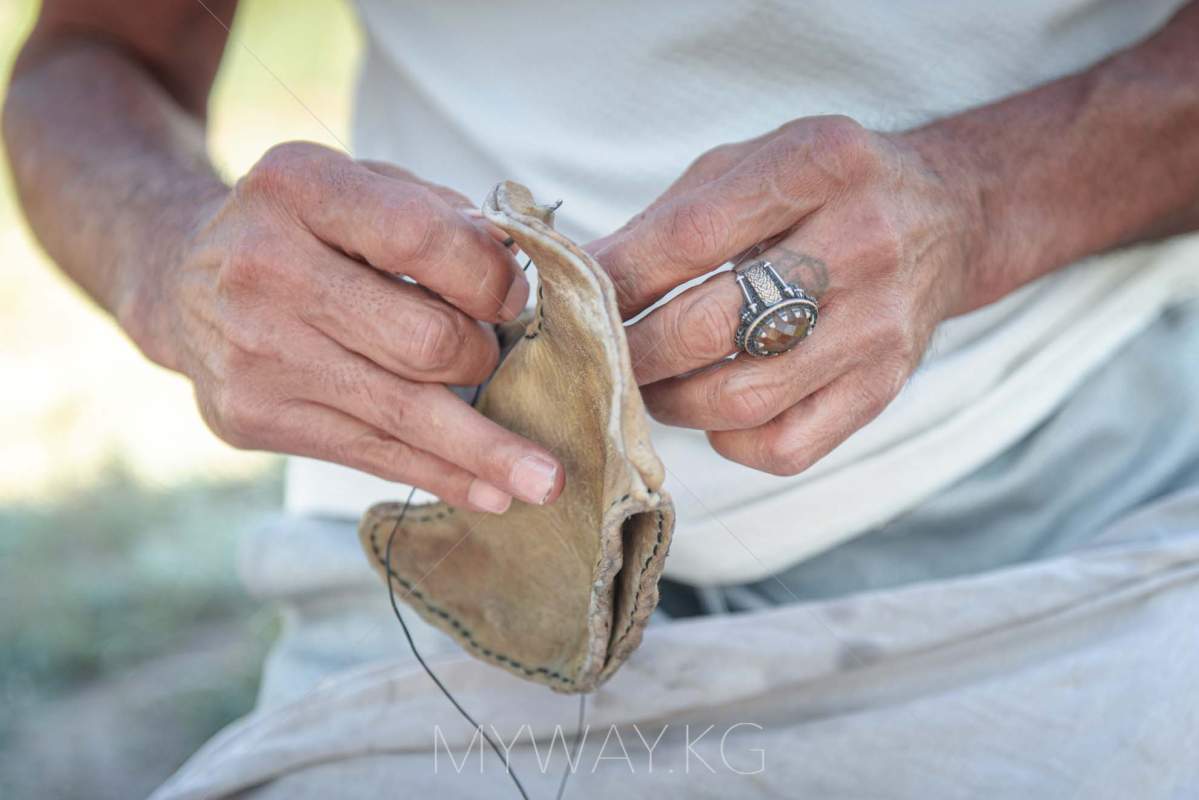
Leather and hides from domestic livestock were among the most essential materials of nomadic daily life. Artisans crafted not only saddles, bridles, reins, and straps, but clothing, footwear, vessels, food storage containers, household goods, and components for musical instruments and hunting gear. Master leatherworkers knew how to transform raw hides into rugged, weatherproof material and shape them to exact suppleness.
From leather and pelts came sheepskin coats (ton), fur-lined coats (ichik), leather riding trousers (jargak-shym and kandagai), mittens (kol kap), belts (kur and kemer), hats, and traditional footwear—including chokoi, charyk, mökü, soft-soled maasy, and riding boots.
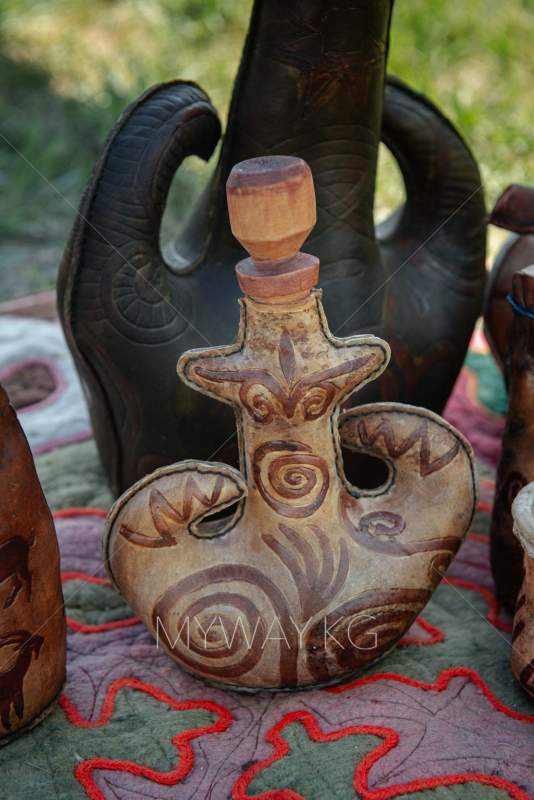
Leather vessels were particularly remarkable. Horsehide was sewn into large saba churns for fermenting and storing kymyz, while smoked goatskins stripped whole formed chanach flasks for carrying drinks on horseback, alongside sculpted könök pitchers and embossed köökör flasks. Households also relied on leather buckets, chests, small pouches (tulup), salt bags, and hide floor mats (talpak, köldölöng, bostek).
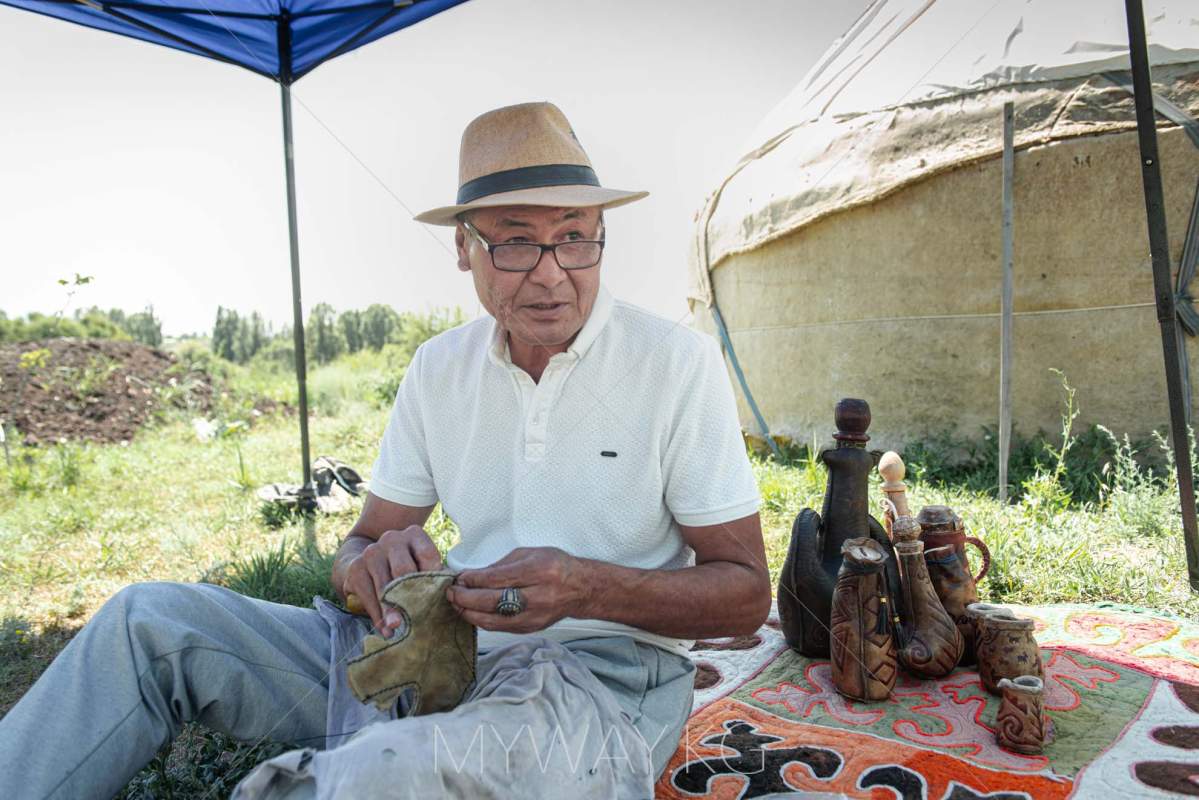
Saddlery formed a specialized craft of its own. Because the horse was transport, work partner, and a central pillar of social life, every saddle, girth, and bridle required absolute structural reliability—a flaw was never merely cosmetic, but a hazard on mountain trails.
Hide tanning demanded deep material knowledge and patience: skins were soaked, cured in malma (a fermented mixture of salt, airan, and bran), dried, and worked soft using a wooden talku press. To make leather vessels waterproof and long-lasting, artisans smoked them over smoldering fires inside a special pit (yshtyk) before rubbing them with sheep's tail fat.
Master woodworkers (jygach usta) worked with poplar, willow, juniper (archa), birch, elm, walnut, and other native woods—selecting flexible timber for bent frames and dense hardwood for furniture, bowls, and carving. From wood came the skeleton of the yurt (kerege and uuk), doors and jambs, saddle trees, cradles (beshik), storage chests (sandyk), low cabinets (javan), stands for stacked bedding, and tableware cases.
Wooden utensils were indispensable across the homestead: bowls, serving platters (tabak), spoons, ladles, buckets,mortars, troughs, sieves, covered jars, kymyz paddles, coat poles, loom parts, spindles, farm tools, and even wooden sledges. Woodworkers also carved komuz lutes and traditional instruments, finishing many pieces with intricate carving and painted motifs.
Although Kyrgyz heritage is most closely associated with pastoral nomadism, the region's history also encompasses agricultural, mercantile, and urban traditions—giving pottery and ceramics a meaningful place in local craft culture.
Potters shaped clay into bowls, pitchers, cooking pots, decorative vessels, and everyday kitchenware used for preparing and storing food, water, and dairy products. Ceramics played an especially prominent role in southern Kyrgyzstan, where ancient towns and Silk Road trade routes fostered centuries of interaction between nomadic and settled artisans.
Kyrgyz decorative and applied arts have never remained confined to museum glass. Today, artisans continue felting shyrdak and ala kiyiz carpets, embroidering, weaving on traditional looms, and forging silver heirlooms. Woodworkers craft furniture, tableware, and musical instruments; jewelers reinterpret classic forms; and leatherworkers bring nomadic craft traditions into contemporary life.
Rather than standing frozen in time, these traditions continue to evolve with new forms and material combinations—rooted in deep respect for natural materials, hand craftsmanship, and the unmistakable visual language of Kyrgyz culture.
Discover more handpicked adventures and guided experiences in Kyrgyzstan